Servlets
In Java web apps, Servlet container (web server) takes care of translating the HTTP messages for java code to understand. One of mostly used servlet container is Apache Tomcat.
Servlet Container converts the HTTP messages into ServletRequest and hand over to Servlet method as a parameter
Similarly, ServletResponse returns as an output to Servlet Container from Servlet. So everything we write inside the Java web apps are driven by Servlets
Filters
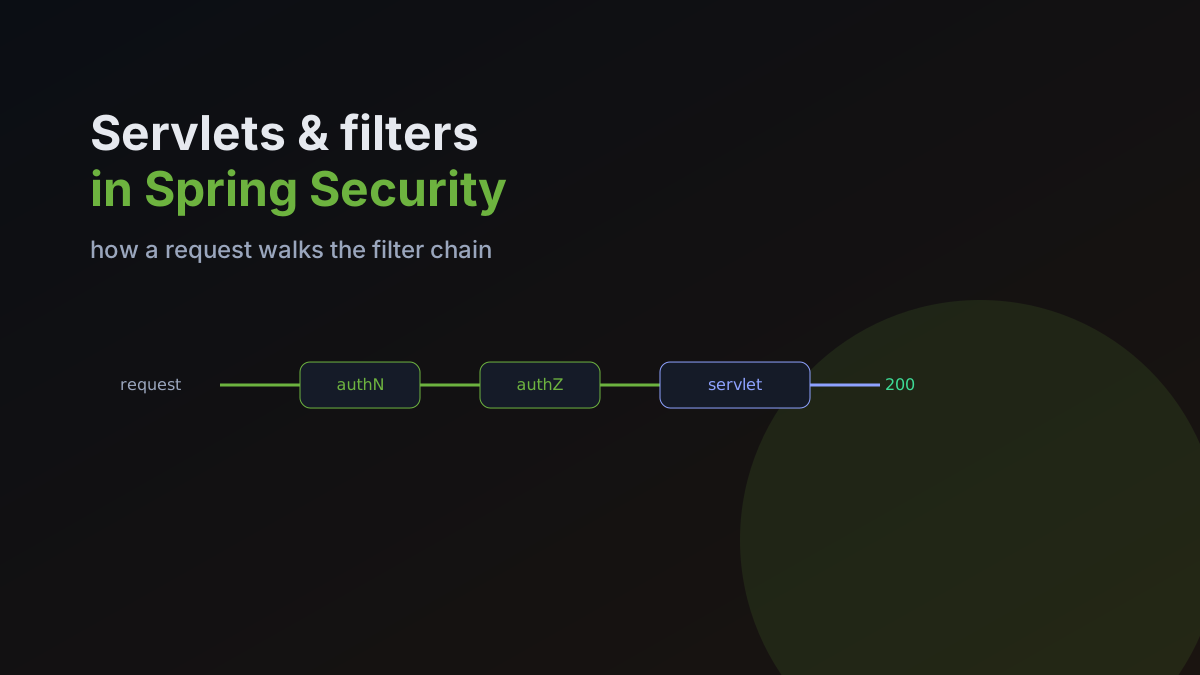
Filters inside Java Web Applications can be used to intercept each request/response and do some pre-work before our business logic. So using the same filters, Spring Security enforce security based on our configurations inside a web application
Spring Security Internal Flow
Spring Security Filters
A series of spring security filters intercept each request and work together to identify if authentication is required or not.
If authentication is required, accordingly navigate the user to login page or use the existing details stored during the initial authentication
Authentication
Filters like UsernamePasswordAuthenticationFilter will extract username/password from HTTP request and prepare Authentication type object. Because Authentication is the core standard of storing authenticated user details inside Spring Security Framework
AuthenticationProvider
AuthenticationProviders has all the core logic of validating user details for authentication
UserDetailsManager/UserDetailsService
UserDetailsManager/UserDetailsService helps in retrieving, creating, updating, deleting the User details from the DB/storage systems
PasswordEncoder
Service interface that helps in encoding and hashing passwords. Otherwise we may have to live with plain text passwords
SecurityContext
Once the request has been authenticated, the Authentication will usually be stored in a thread-local SecurityContext managed by the SecurityContextHolder.
This helps during the upcoming requests from the same user
Sequence Flow
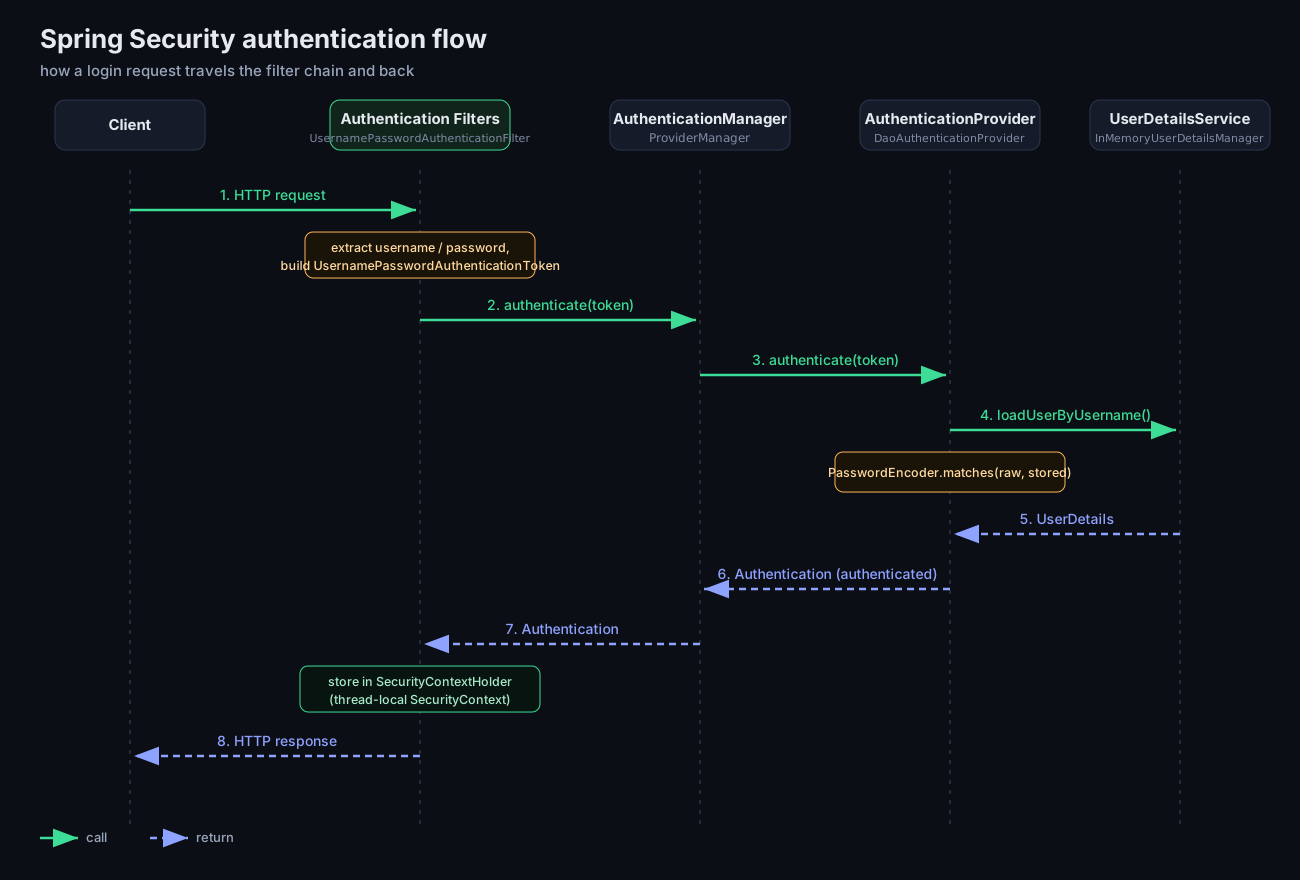
Reading the flow step by step:
- HTTP request arrives and is intercepted by the authentication filters (e.g.
UsernamePasswordAuthenticationFilter). - The filter extracts the credentials and builds an
Authenticationobject — aUsernamePasswordAuthenticationToken. - It calls
authenticate(token)on theAuthenticationManager(ProviderManager). - The manager delegates
authenticate(token)to a suitableAuthenticationProvider(DaoAuthenticationProvider). - The provider calls
loadUserByUsername()on theUserDetailsService(InMemoryUserDetailsManager) to fetch the stored user. - With the returned
UserDetails, the provider verifies the password via thePasswordEncoder(matches(raw, stored)). - A fully populated, authenticated
Authenticationpropagates back up: provider → manager → filter. - The filter stores it in the
SecurityContext(thread-local, viaSecurityContextHolder) so later requests from the same user are already authenticated — then the response is returned.
Originally published on dev.to.