Code Insights is an IDE extension that surfaces JUnit/JaCoCo coverage and runs SonarQube rules fully offline via a bundled SonarLint engine. It gives you the same findings you’d get from a server scan, but instantly and without sending your code anywhere.
Internal project. This is a closed-source tool built in an employer context, so the source isn’t public. The architecture below is a scrubbed, generic version — there’s a fuller write-up in Coverage and offline static analysis in the editor.
Why I built it
Waiting on a CI quality gate to learn you broke a Sonar rule is a slow feedback loop.
Code Insights brings coverage and static analysis right into the editor, so issues show up while you’re still writing the code that caused them.
What it does
- Surfaces line and branch coverage from JaCoCo directly in the gutter.
- Runs SonarQube rules offline with full rule parity — no server round-trips.
- Auto-detects Maven/Gradle projects and resolves per-module classpaths.
- Respects quality thresholds and points you at exactly what to fix.
Architecture
The shape that makes “offline + parity” work is three runtimes cooperating. The extension host (TypeScript) orchestrates everything but does no analysis itself; the real work runs in spawned processes — mvn/gradle for tests, and a JVM running the real sonar-java analyzer for rules. The only network call is a one-time rule sync.
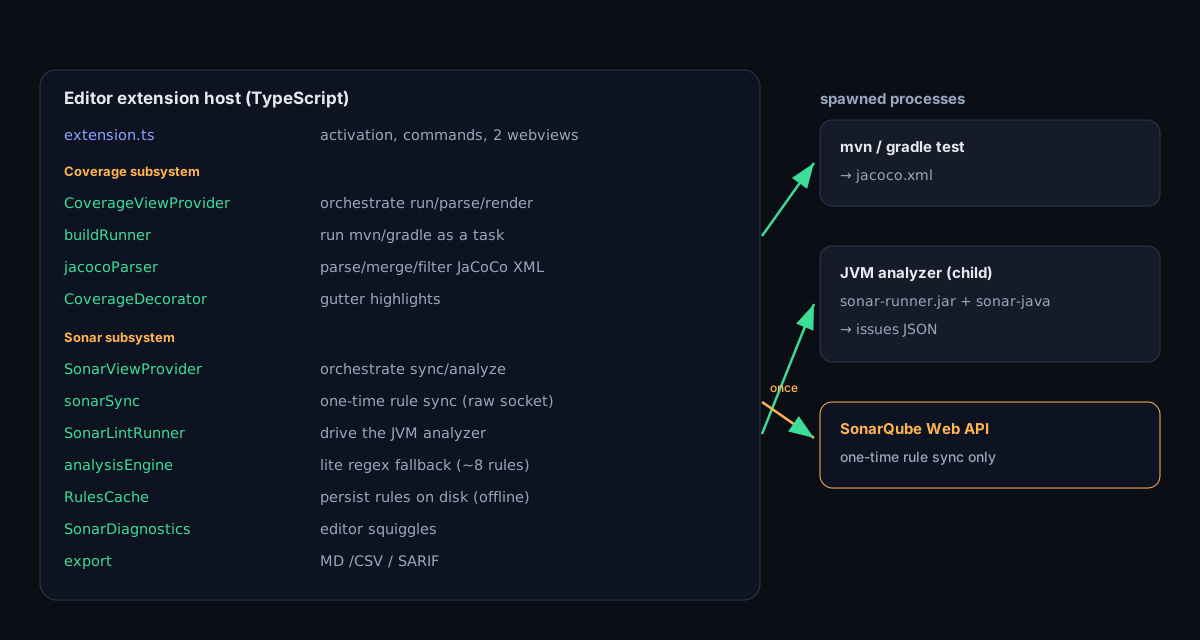
Technical explanation
There are two subsystems behind one UI, and three flows tie them together:
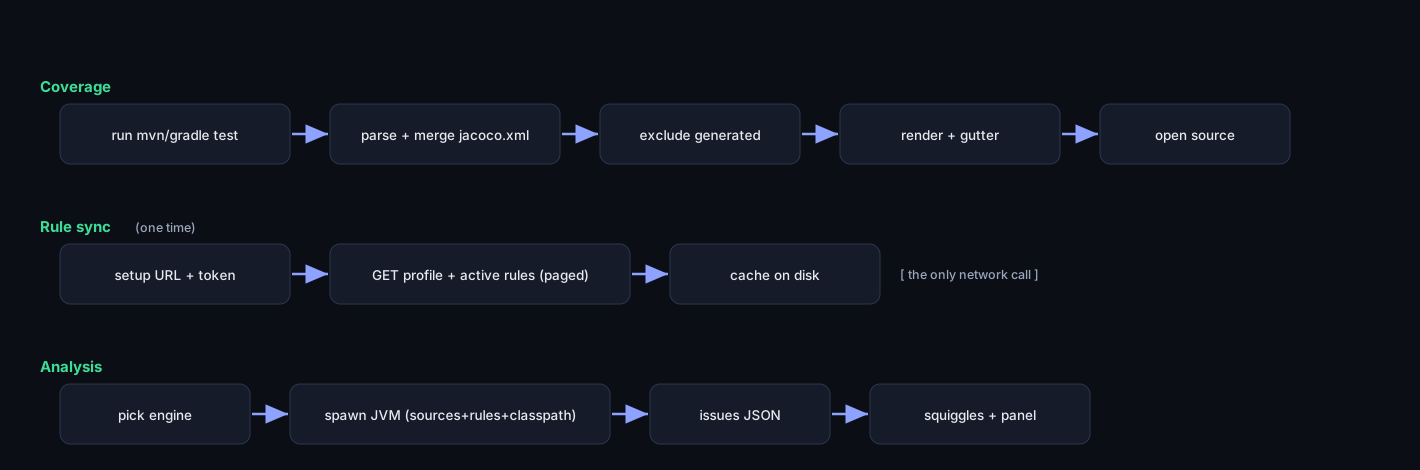
- Coverage runs
mvn/gradle test, then parses and mergesjacoco.xmlacross modules, excludes generated sources, and renders gutter highlights you can click to jump to source. - Rule sync happens once: it pulls the quality profile’s active rules over the Sonar Web API and caches them on disk. That’s the only time anything leaves the machine.
- Analysis picks an engine — the bundled
sonar-javawhen a JDK and jars are available, or a lite regex fallback otherwise — spawns it out-of-process with sources, the active rules, and the resolved classpath, and turns the resulting issues JSON into editor squiggles.
A few decisions hold it together: spawning the real analyzer (instead of reimplementing rules in JavaScript) buys rule parity for free and keeps an analyzer crash from taking the editor with it; syncing once and caching on disk keeps every later scan fully local; and secrets live in VS Code SecretStorage, never in plain settings.
What made it hard
The interesting work was embedding a real SonarLint + sonar-java engine and shading it
into a runnable jar the extension can drive — getting full rule parity with the server while keeping everything local, and resolving per-module classpaths and generated sources so analysis sees the same code the compiler does.