swagger-view is a local-first Swagger/OpenAPI preview extension — an embedded Swagger UI with zero callbacks to any server, plus unused-definition detection and safe bulk cleanup. Published as open source under WeDontTrack.
Local-first by design
Most online editors send your spec to a server to render it. swagger-view reads it from disk, parses it locally, and renders it locally — which matters when the spec describes an internal or unreleased API. There’s a fuller write-up in the blog post on local-first dev tools.
Architecture
The extension splits into two runtimes: the extension host (Node/TypeScript, where parsing and analysis live) and a webview (the sandboxed Swagger UI that only renders).
Nothing else is in the picture — no backend, no network. Disk is the single source of truth.
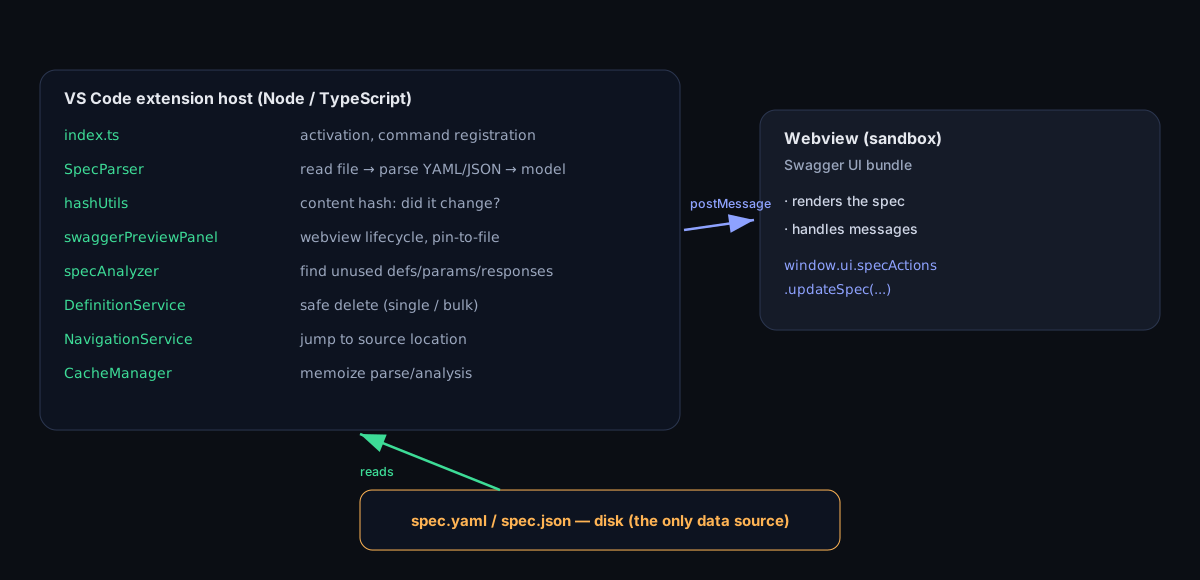
The host owns truth and the webview only renders; they communicate over a postMessage bridge. Because the parsed model is computed once and reused, preview, unused-definition detection, deletion, and navigation are all just readers of the same model — which is exactly why none of them needs a server.
Technical explanation
The “live preview” everyone expects is a small pipeline, and keeping each hop honest is what makes it feel instant:
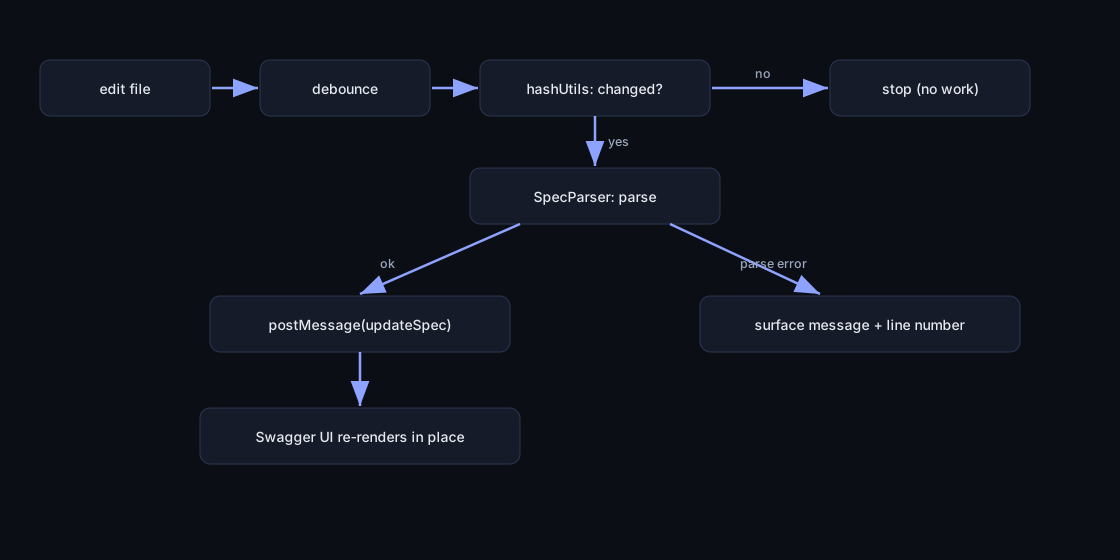
- An edit is debounced, then a content hash short-circuits no-op changes before any work happens.
- On a real change,
SpecParserparses the file; on success the host postsupdateSpecand Swagger UI re-renders in place; on a parse error it surfaces the message and line number. - Hash-based caching memoizes parse/analysis output so repeated renders stay cheap.
- Deletion is transaction-safe — edits are applied bottom-to-top so earlier removals don’t shift the line numbers of later ones.
More than a preview
Because it already understands your spec, it can keep it clean:
- Finds unused definitions, schemas, parameters and responses.
- Lets you jump to the exact location of any item or endpoint.
- Deletes unused definitions safely — one at a time or in bulk.