webblock is a Linux website/IP blocker that drops outbound traffic to specified domains and IPs at the kernel packet layer, enforcing both system-wide and per-user policies — without a single setuid binary.
Status: in progress. This is an active work-in-progress personal project. The design is implemented and evolving; it isn’t open-sourced yet. See the design walk-through in Blocking websites at the kernel layer on Linux.
Why I built it
/etc/hosts and DNS blocklists are system-wide only and trivially bypassed by hitting an IP directly. I wanted a blocker that applies to every client (including curl http://<ip>), supports private per-user lists, lets root administer everyone, and uses no setuid — each of which quietly rules out the easy options.
Architecture
The whole system is two processes split across a privilege boundary, with the kernel as the actual enforcement point. The goal of the shape is to keep one small surface privileged and everything else powerless.
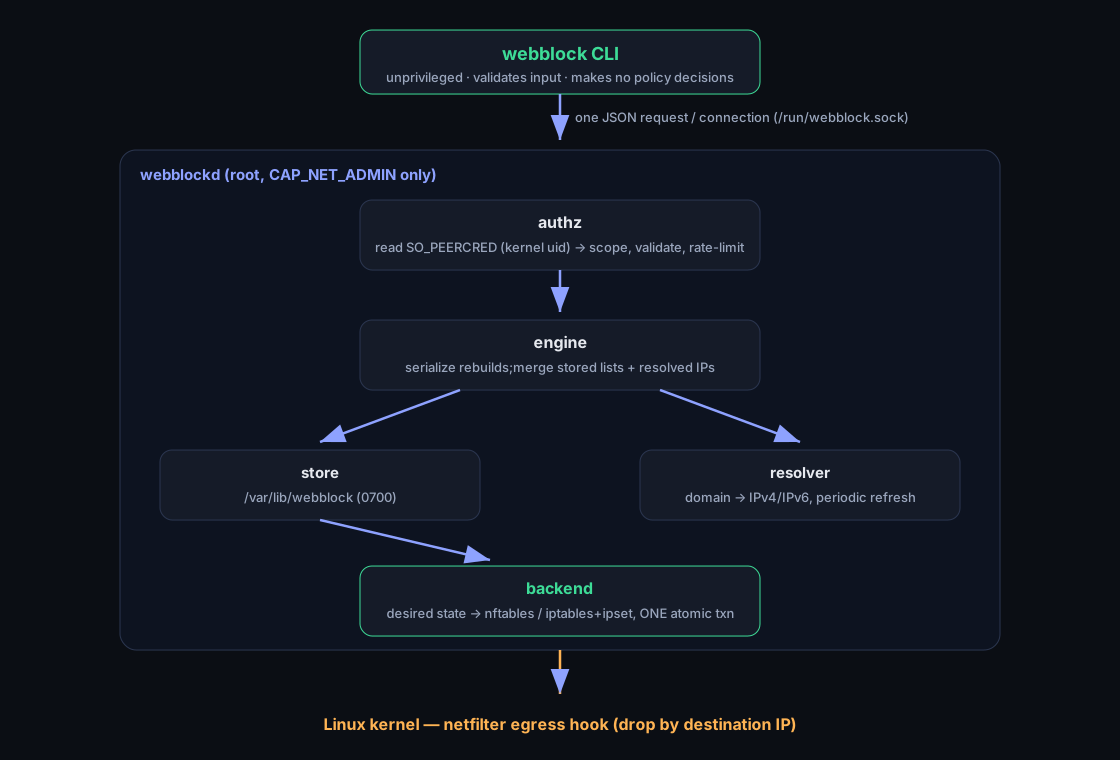
A root daemon (webblockd, CAP_NET_ADMIN only) owns the firewall and config; an unprivileged CLI just validates input and sends one JSON request per connection over a Unix socket. Compromising the CLI grants nothing — it holds no privileges and makes no policy decisions.
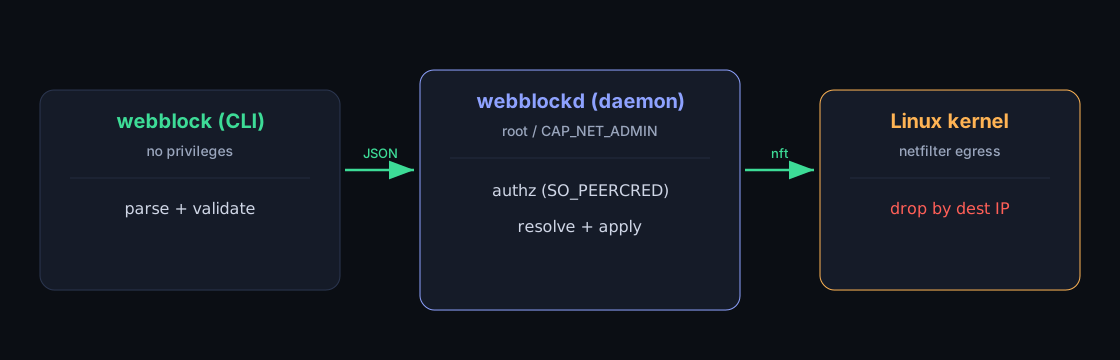
Technical explanation
- Enforcement in the kernel: a netfilter egress filter drops packets by destination IP, so the block is independent of which process or name resolution produced the request.
- Kernel-verified identity: the request protocol carries no uid field. The daemon reads the caller’s uid from
SO_PEERCRED— which the kernel fills in and the client can’t forge — so per-user authorization is trustworthy. uid 0 manages everyone; any other uid is scoped to its own list. - O(1) data plane: named hash sets give ~O(1) membership checks, and a per-uid verdict map (
meta skuid vmap) keeps the per-packet cost a single map lookup regardless of how many users have lists — not a linear scan. - Atomic, fail-safe applies: every change is one
nft -ftransaction (or the ipset create/swap/destroy idiom), so there’s never a half-applied ruleset. A transient DNS failure retains the previous IPs rather than silently unblocking, and persisted lists are reconciled into the live firewall on boot.
What made it interesting
Most of the architecture fell out of the constraints: “no setuid” and “per-user privacy” forced the daemon/client split and kernel-verified identity. Designing the data plane for O(1) up front, and defaulting every failure mode to fail-safe (a DNS hiccup keeps the previous block rather than silently unblocking), were the decisions that mattered most.